
Cabinet materials for Florida humidity: what swells and why
Updated November 3, 2026
Humid air alone is usually not what ruins cabinets in Florida; liquid water reaching a raw edge causes the lasting damage, so covered faces and protected edges matter more than the board name. MDF, plywood and solid wood respond differently to moisture. Knowing where water can reach the board helps you choose cabinets for a kitchen, vanity, closet or laundry room.
Prefer to call? (954) 800-0255 · WhatsApp
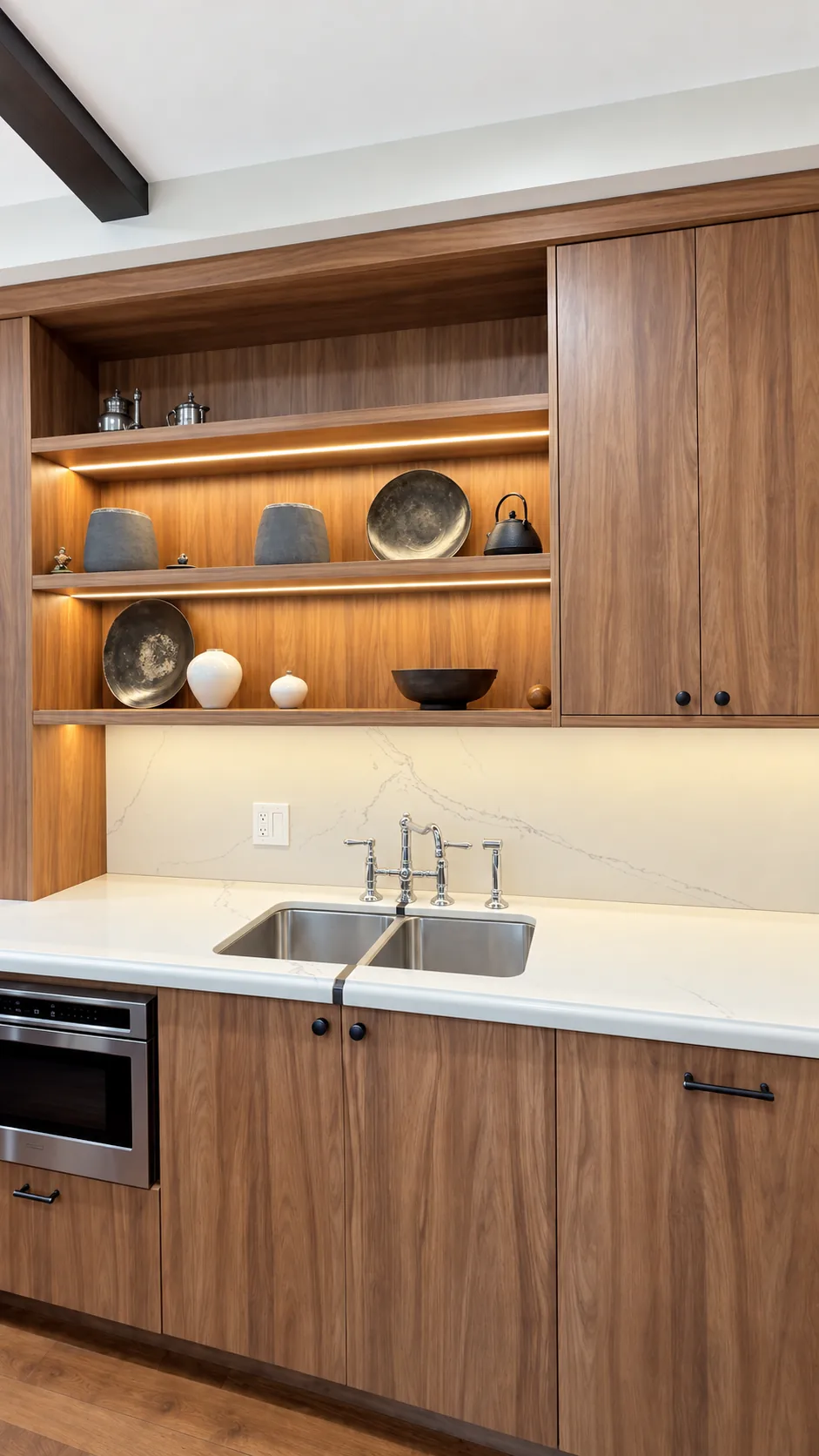
What humidity does to cabinet boards
Wood-based cabinet boards take on a little moisture from humid air and release it as the air dries. That happens with MDF, particleboard and plywood. A change in air humidity is different from a slow leak soaking the bottom of a cabinet.
MDF stays flat and steady as air humidity changes, which is one reason it is used for laminate and other cabinet fronts. Solid wood moves across the grain. A wide solid wood panel can cup, crack or stick as conditions change.
Inside a South Florida home, air conditioning helps keep humidity steadier. A home closed for weeks with the air conditioning off can become damp inside. This matters for kitchen cabinets and closets alike, even where there is no sink nearby.
The material matters, but so does the finished cabinet: its faces, edges and openings all affect where moisture can enter.
What swells when cabinets get wet
Raw MDF and particleboard edges swell when liquid water reaches them, while a laminate face does not soak up water. Here is how the main materials and exposed areas behave:
- Raw MDF and particleboard edges: Wet edges swell and stay swollen after drying. The surface can turn rough, and the edge band can lift.
- Laminate faces: TFL, or thermally fused laminate, does not soak up water through its face. The board beneath it still needs protection at its edges and openings.
- Solid wood: Humidity changes its dimensions across the grain. Wide panels can cup or bind.
- Plywood: It handles an occasional splash better than MDF and holds screws well. Its edges still take on water when they stay wet.
- Edges and cut-outs: A joint, screw hole or opening can let water reach the board, even when the broad face is covered.
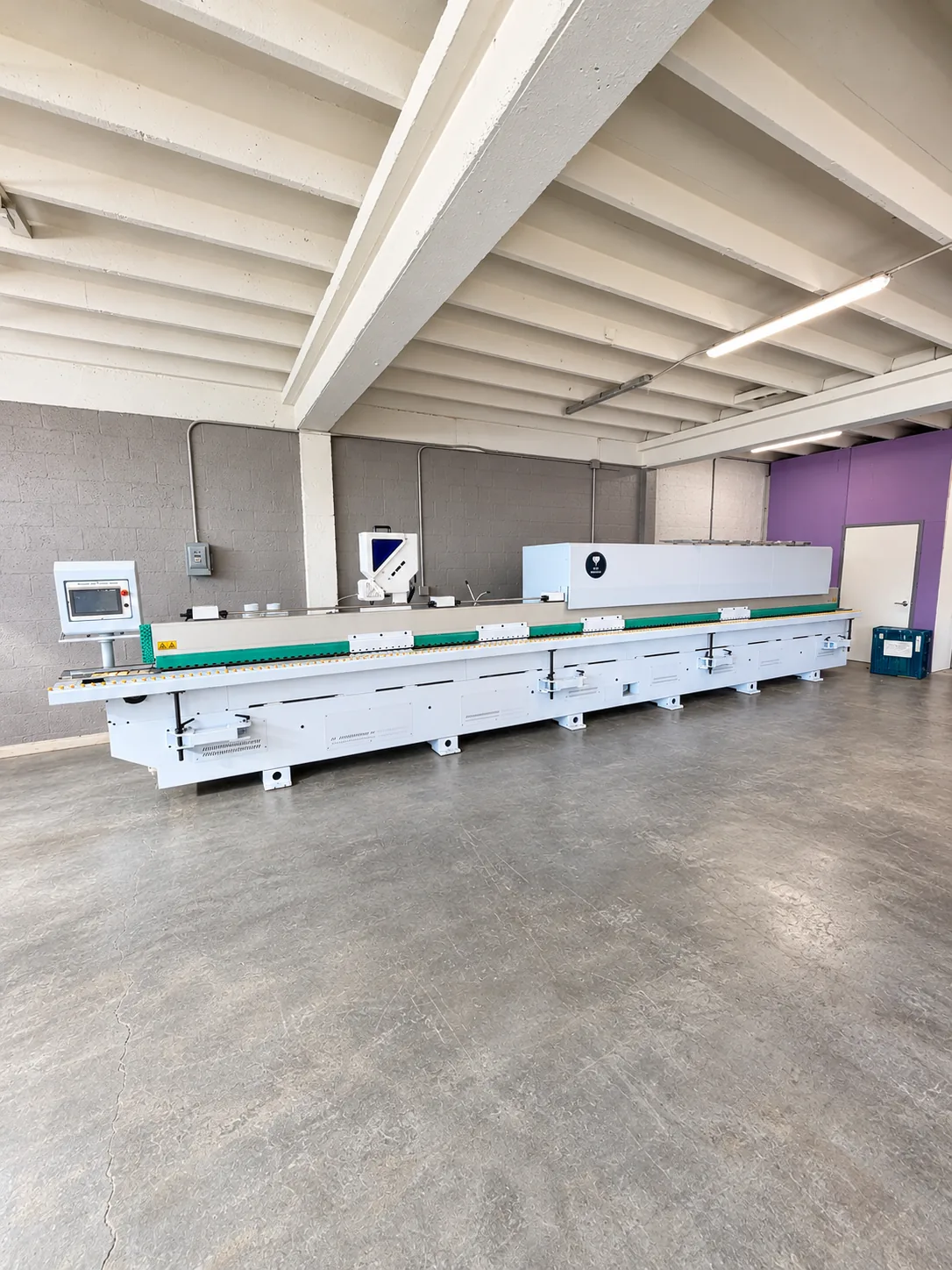
Why the edge matters most: PUR edge banding
Edge banding covers the raw edge of a panel, and the glue bond helps resist moisture at that connection. A laminate face covers the broad surface; the narrow edge needs its own protection.
EVA hot-melt glue is commonly used for edge banding. It softens again when heated and usually leaves a more visible glue line. PUR, short for polyurethane reactive, cures with moisture into a bond that resists water and does not soften again with heat. It also allows a thin glue line between the panel and the band.
The edge must be clean before the glue goes on. Pre-milling trims a fresh edge immediately before gluing, removing chips so the band sits against a clean surface.
In our Oakland Park shop, we band every exposed edge to match the finish on our pass-through PUR edge bander. The machine pre-mills the panel, applies glue, trims the band, rounds the corners, then scrapes and buffs it.
That moisture-resistant bond helps protect the edge. We also offer a cut and edge service for the trade.
How we build cabinets for South Florida homes
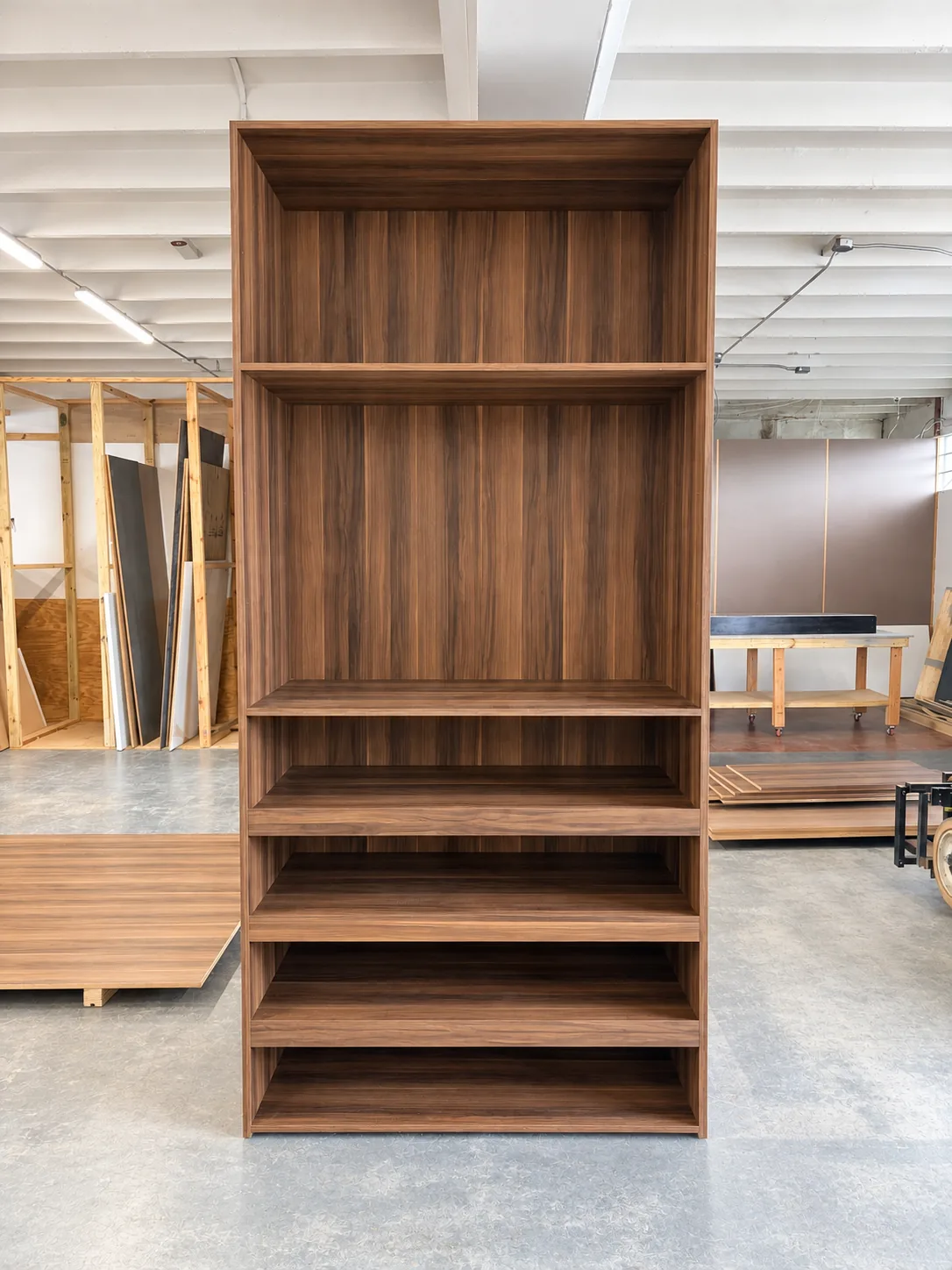
Our main cabinet material is TFL on 3/4" MDF, with every exposed edge banded to match on our PUR edge bander. The laminate covers the face, and the band covers the exposed panel edge.
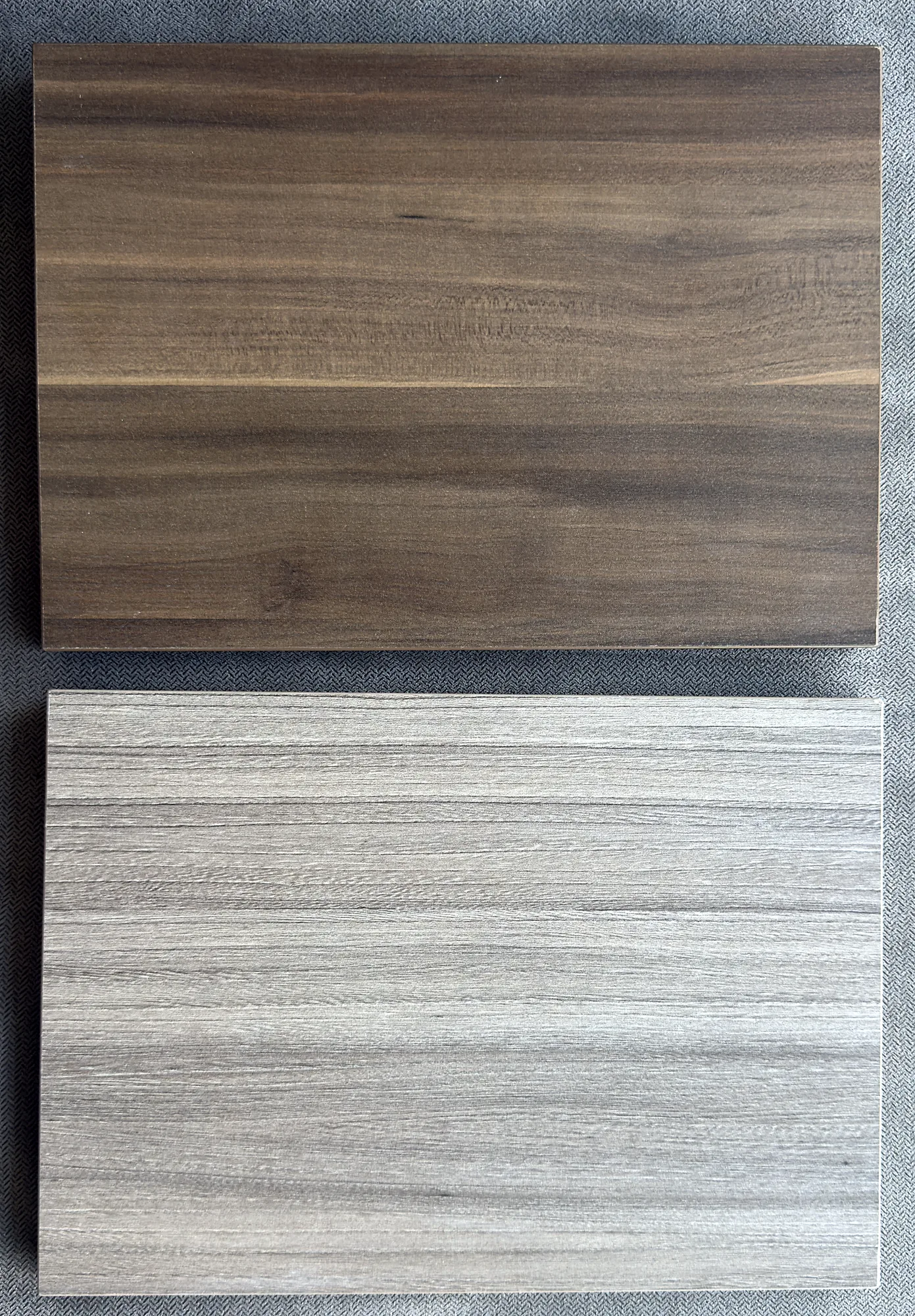
For custom kitchen cabinets, finishes include whites and solid colors, light through dark wood grains, and stone, linen and metallic looks. We also build in wood veneer. Handleless fronts and soft-close hardware are available.
Screen previews help narrow the selection, but you choose the finish from physical samples at the site measure. A sample lets you see the actual color and texture in the room. You can also look at a walnut kitchen we built to see a completed project.
Our team measures, draws, builds in our Oakland Park shop and installs with our own crew. A designer prepares the 3D render to show the look; the shop drawings specify what gets built. Production starts after you approve those drawings.
Where water reaches kitchen, vanity and laundry cabinets
Water most often reaches cabinets around sinks, dishwashers, bathroom vanities, laundry areas and toe kicks. These locations deserve attention because liquid water can sit against an edge or enter an opening.
Kitchen sink cabinet water damage often starts with a slow leak at a supply line or drain. Check inside the sink base when you notice dampness, and fix a leak as soon as you see it.
For bathroom vanities, wipe standing water off door edges. Bathroom air humidity and water sitting on an exposed edge are different problems. Air conditioning helps steady indoor humidity; wiping up water removes direct contact.
The same care applies in pantries and laundry rooms. Watch for leaks, and wipe water off the toe kick after mopping. Keeping the floor clean should not leave the cabinet base sitting wet.
Common questions about cabinets and Florida humidity
Will MDF cabinets swell in Florida humidity?
Humid air alone does not make MDF cabinets with laminated faces and banded edges swell; liquid water reaching a raw edge, hole or cut-out does. We build with TFL on 3/4" MDF, with every exposed edge banded on our PUR edge bander.
What is PUR edge banding?
PUR edge banding uses polyurethane reactive glue to bond an edge band to a cabinet panel. The glue cures with moisture, resists water and allows a thin glue line. It helps protect the panel edge.
Is plywood better than MDF in Florida?
Plywood handles occasional splashes better than MDF and holds screws well, but its edges can still absorb water if they stay wet. Both materials work in Florida when faces are covered and edges are sealed. Compare the finished construction as well as the board.
What about the cabinet under the kitchen sink?
A sink cabinet needs protected edges and openings, plus prompt attention to leaks at supply lines and drains. No board choice removes the need to fix a leak. Water left inside the cabinet can reach areas beyond the finished face.
Should I keep the air conditioning on when I am away?
Keeping the air conditioning running, or set to control humidity, helps keep indoor conditions steadier while you are away. A South Florida home closed for weeks with the air conditioning off can get damp inside.
Can I see the materials before I choose?
You choose finishes from physical samples at the site measure. You can also visit our Oakland Park shop by appointment to see where we build; we do not have a showroom.
Get a price range for your cabinets
Tell us about your project using the Get a price range form or call (954) 800-0255, and we will get in touch for photos and rough sizes. Within 24 hours of receiving them, you get a free 3D render and price range before anyone comes out; if the project fits, the site measure is free, and you can read what happens at the site measure.
(954) 800-0255 · WhatsApp · info@treinteriorsfl.com
3034 NE 12th Terrace, Oakland Park, FL 33334